Heartworm Disease Awareness
We hear about heartworm disease and the importance of getting your pet routinely tested for it but do you really know what heartworm disease and the seriousness of it if left untreated? Unsure…we would like to take a moment to educate you on heartworm disease, what to look for and what you can do to prevent it.
Let’s start with the basics. What is heartworm disease? Heartworm disease is a serious and potentially fatal disease in pets in the United States and many other parts of the world. It is caused by worms (heartworms) that live in the heart, lungs and associated blood vessels of affected pets, causing severe lung disease, heart failure and damage to other organs in the body. Heartworm disease affects dogs and cats but heartworms also live in other mammal species, including but not limited to coyotes and foxes. Since these wild species live in proximity to many urban areas, they are considered important carriers of the disease.
So your next question might be….can heartworm disease be transmitted from one pet to another? And the answer is YES! Once again we can blame those pesky mosquitos for being disease transmitters. Adult female heartworms living in an infected dog, fox, coyote, or wolf produce microscopic baby worms called microfilaria that circulate in the bloodstream. When a mosquito bites and takes a blood meal from an infected animal, it picks up these baby worms, which develop and mature into “infective stage” larvae over a period of 10 to 14 days. Then, when the infected mosquito bites another dog, cat, or susceptible wild animal, the infective larvae are deposited onto the surface of the animal’s skin and enter the new host through the mosquito’s bite wound. Once inside a new host, it takes approximately 6 months for the larvae to mature into adult heartworms. Once mature, heartworms can live for 5 to 7 years in dogs and up to 2 or 3 years in cats. Because of the longevity of these worms, each mosquito season can lead to an increasing number of worms in an infected pet.
The ONLY way to protect your furry family member from getting this disease is prevention, prevention, prevention. These preventative measures include routine annual screening and monthly preventatives. It is important to speak with your doctor about the best prevention plan for your pet.
While both our dog and cat friends can get heartworms, they are affected differently….after all they are quite different species.
Heartworm disease in dogs: The dog is a natural host for heartworms, which means that heartworms that live inside the dog mature into adults, mate and produce offspring. If untreated, their numbers can increase, and dogs have been known to harbor several hundred worms in their bodies. Heartworm disease causes lasting damage to the heart, lungs and arteries, and can affect the dog’s health and quality of life long after the parasites are gone.
Heartworm disease in cats: The cat is an atypical host for heartworms, and most worms in cats do not survive to the adult stage. Cats with adult heartworms typically have just one to three worms, and many cats affected by heartworms have no adult worms. While this means heartworm disease often goes undiagnosed in cats, it’s important to understand that even immature worms cause real damage in the form of a condition known as heartworm associated respiratory disease (HARD).
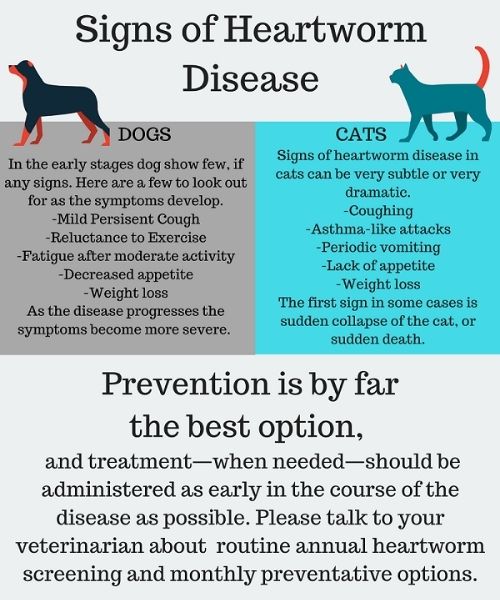
Here is a graphic breakdown of signs to look for if your pet has been infected. Once again, the only way to protect your pet is through preventative measures.